A woman from my neighborhood recently visited the local utility store with her BISP payment message saved carefully on her old mobile phone. While waiting in line, she kept discussing how difficult it has become to manage groceries, school expenses, medicines, and electricity bills with rising prices everywhere.
When news started spreading that the Benazir Income Support Programme (BISP) stipend may increase from Rs. 14,000 to Rs. 18,000, many low-income families across Pakistan felt some relief for the first time in months.
Honestly, for families already struggling with inflation, even a few thousand rupees extra can make a meaningful difference in monthly survival.
This guide explains the latest update about the BISP stipend increase for 2027, eligibility criteria, registration process, and important things beneficiaries should know in simple language without confusing terms.
BISP Quarterly Stipend Increased to Rs. 18,000
The government has officially approved a major increase in financial assistance under the Benazir Income Support Programme.
According to the latest update:
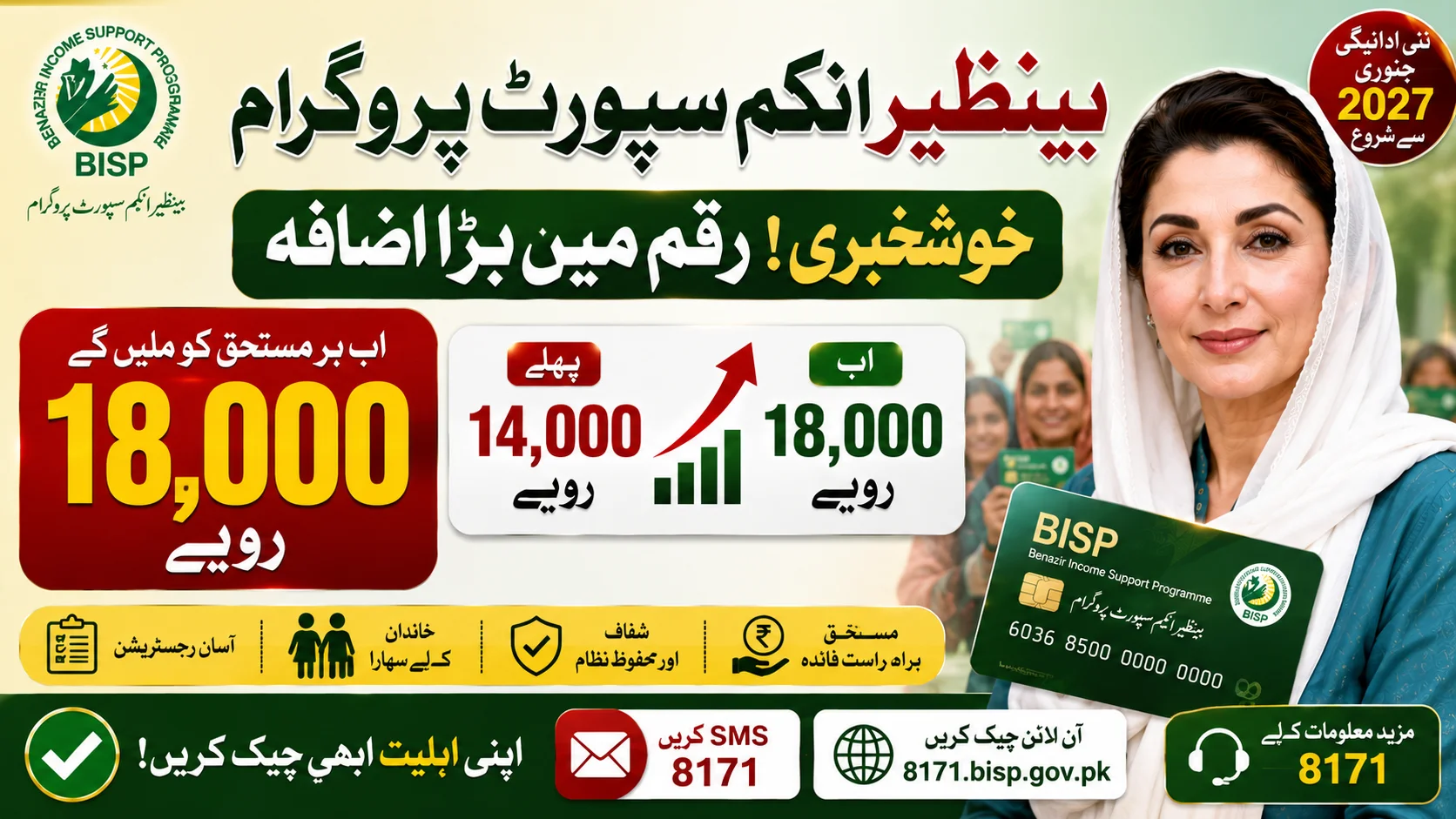
- Previous quarterly payment: Rs. 14,000
- New approved payment: Rs. 18,000
- Increase amount: Rs. 4,000
- Implementation expected from: January 2027
This increase is being linked with broader welfare reforms and inflation-related relief measures.
For many deserving households, this news brings hope because daily living expenses have increased sharply over the last few years.
Why This Increase Matters for Poor Families
People who are not facing financial pressure may not fully understand how important these payments are for deserving households.
I personally know families who use BISP payments for:
- Monthly groceries
- Children’s school fees
- Medicines
- Electricity bills
- Emergency household expenses
One widow in our area said her previous payment barely lasted a few weeks due to inflation. An increase to Rs. 18,000 could help many families manage basic needs more comfortably.
Who Can Qualify for BISP in Pakistan?
Many people wrongly assume that only unemployed individuals qualify. The system actually checks overall household conditions through the NSER survey and PMT score system.
Common Eligible Categories
- Low-income households
- Widows
- Divorced women
- Single mothers
- Families with disabled members
- Orphan-support households
- Elderly dependents
- Transgender individuals with valid CNIC
- Ever-married women aged 18+
- Never-married women aged 40+
The program mainly prioritizes financially vulnerable households.
How BISP Eligibility Is Decided
Eligibility is usually determined through the National Socio-Economic Registry (NSER) survey.
The system calculates a poverty score called the PMT score based on:
- Household conditions
- Family size
- Income situation
- Living standards
- Utility usage
- Other socio-economic details
One important thing many people misunderstand is that approval is not based only on salary or income slips.
How to Check BISP Eligibility
There are multiple ways applicants can check their eligibility status.
Method 1: Check Through SMS
This is the easiest method for most people.
Simple SMS Method
- Open mobile messages
- Type your 13-digit CNIC number
- Send it to 8171
- Wait for response message
Many elderly users prefer this method because it works without internet access.
Method 2: Check Through Online Portal
Applicants can also check status through the official BISP eligibility portal.
Portal Method
- Open official portal
- Enter CNIC number
- Complete verification
- Check eligibility status
This method is useful for users comfortable with internet browsing.
Method 3: Visit BISP Office
Some cases require physical verification.
Applicants may visit the nearest BISP Tehsil office if:
- CNIC information needs updating
- Biometric verification fails
- Household records are incomplete
- Eligibility status shows errors
Personally, I noticed many issues get resolved faster after visiting the office directly instead of relying only on social media information.
How to Register for BISP Program
One common misunderstanding online is that complete BISP registration happens fully online.
That is not completely true.
The main registration process still usually requires NSER survey verification.
Basic Registration Process
Step 1: Visit Registration Center
Go to nearest BISP or Tehsil office.
Step 2: Provide CNIC
Carry original CNIC and household information.
Step 3: Submit Documents
Additional documents may include:
- Widow certificate
- Disability certificate
- Family information
Step 4: Complete Biometric Verification
Fingerprint verification happens through NADRA-linked systems.
Step 5: Wait for PMT Score Review
The system checks socio-economic eligibility.
Important Documents Required
Before visiting registration centers, prepare these documents carefully.
Commonly Required Documents
- Original CNIC
- Mobile number registered on CNIC
- Children B-Form (if applicable)
- Widow certificate (if applicable)
- Disability documents
- Household details
One woman I know had to revisit the office twice because her mobile SIM was not registered in her own name.
Government Planning to Add More Families
Another important update is that around 200,000 additional families may be included in the BISP system under future expansion plans.
This could help many deserving households who were previously waiting for inclusion.
Common Mistakes People Should Avoid
After helping several families understand the process recently, I noticed the same mistakes repeatedly.
Most Common Problems
- Incorrect CNIC digits
- Fake SMS scams
- Trusting unofficial agents
- Outdated household information
- SIM not registered on applicant’s CNIC
- Incomplete NSER survey data
Many scammers also falsely promise “guaranteed approval” in exchange for money.
Important Safety Tips for Beneficiaries
Whenever BISP payments increase, scammers become more active online and through fake phone calls.
Stay Safe by Following These Tips
- Trust messages only from 8171
- Never share OTP codes
- Avoid paying agents
- Keep payment receipts safe
- Verify updates from official sources only
One family near my area almost lost money after receiving a fake call asking for “verification charges.”
Why BISP Still Matters in Pakistan
Despite criticism and political debates, the reality is that BISP remains one of the biggest financial support systems for vulnerable families in Pakistan.
For many women-led households especially, these payments provide stability during difficult times.
Even a modest increase in assistance can help families manage inflation more effectively.
Final Thoughts
The increase of the BISP quarterly stipend from Rs. 14,000 to Rs. 18,000 is important news for millions of deserving families across Pakistan.
While the revised payment structure is expected from January 2027, eligible households should still ensure their NSER records, CNIC information, and biometric verification remain updated.
The safest approach is always to use official BISP channels, avoid fake agents, and complete verification processes carefully to prevent unnecessary delays later.